Don't miss our holiday offer - up to 50% OFF!
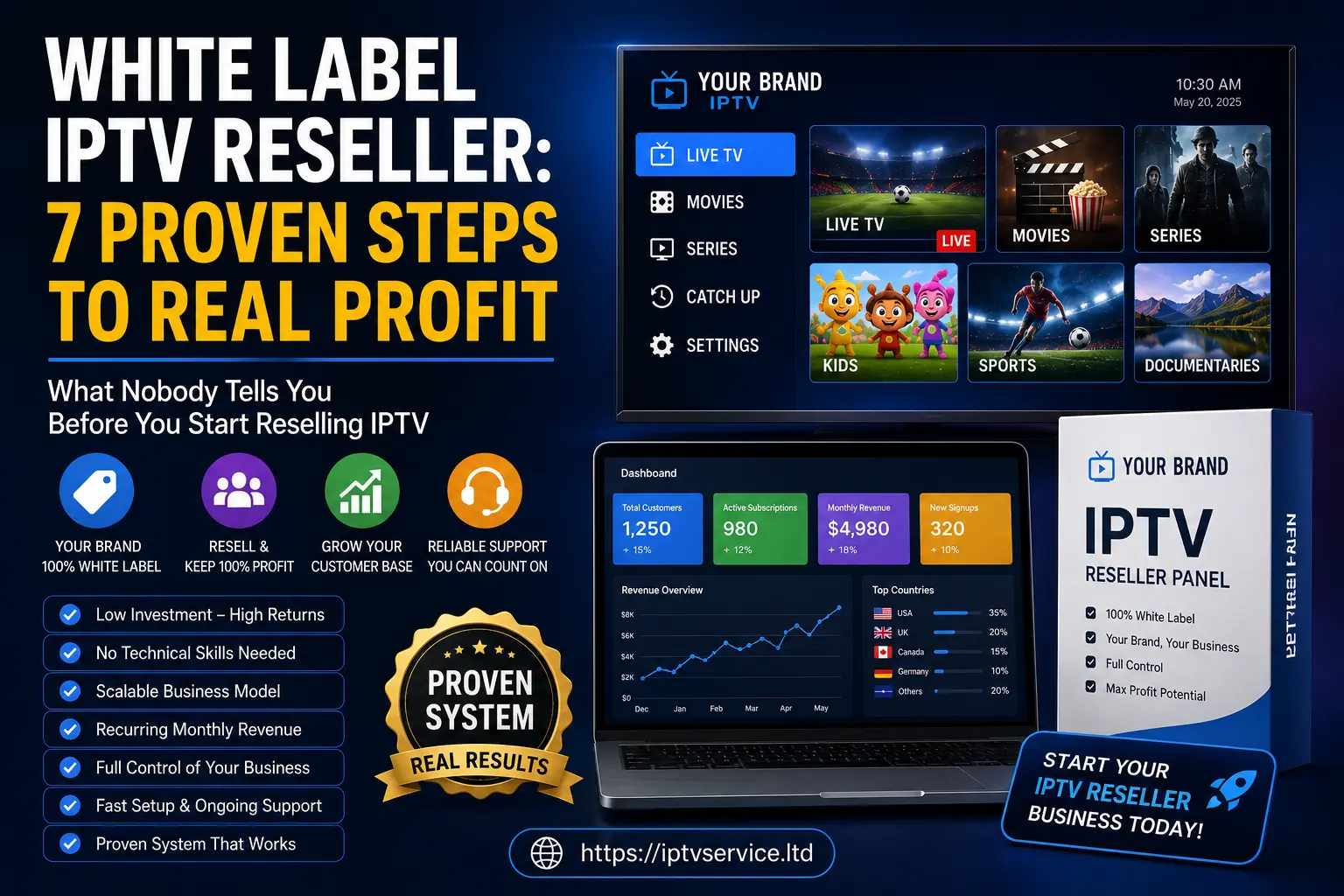
What Nobody Tells You Before You Start Reselling IPTV

Picture this. Someone spends three months building out a reseller panel, designs a logo, sets up a payment gateway, and starts selling subscriptions. Six weeks later, half their customers are filing chargebacks, the stream quality is inconsistent on weekends, and the supplier has gone quiet on support tickets. Sound familiar? It happens constantly in this space, and it happens because people treat a white label IPTV reseller operation like a passive income experiment rather than an actual business.
I’ve spoken to dozens of people who’ve been through exactly this cycle. The market opportunity is real. The potential for recurring monthly revenue is absolutely there. But the gap between “I’ve found a cheap panel to resell” and “I’m running a sustainable IPTV reseller business” is wider than most people expect. This article is about bridging that gap properly.
What a White Label IPTV Reseller Actually Sells
Before getting into tactics, it’s worth being precise about what’s actually on offer here. A white label IPTV reseller isn’t just someone with access to a panel of channels. You’re selling a branded streaming experience your name, your support, your relationship with the customer while the underlying infrastructure, content delivery, and middleware are provided by a third-party supplier.
The “white label” element is critical. Your customers never see your supplier’s name. They see yours. That means when the service works beautifully at 11pm on a Saturday night, they associate that with your brand. And when something goes wrong, they’re calling you, not anyone else. That accountability is simultaneously the biggest risk and the biggest opportunity in this model.
The Three Layers Every Reseller Should Understand
Layer one is the content source channels, VOD libraries, catch-up TV. This sits entirely with your supplier.
Layer two is the middleware platform the interface customers interact with, the EPG, search functions, and account management. Some suppliers let you customise this heavily; others give you almost nothing.
Layer three is your business layer branding, pricing, customer acquisition, support, and billing. This is where your actual value as a white label IPTV reseller is created.
Most beginners focus only on layer one and completely neglect layer three. That’s where the problems start.
Choosing Your Platform: The Decision That Makes or Breaks You
Not all IPTV reseller platforms are built the same. The difference between a reliable supplier and a problematic one isn’t always visible during a Iptv free trial. You need to be asking harder questions before you commit.
Uptime guarantees matter enormously. Any supplier worth working with should be able to show you verifiable uptime statistics across peak hours. Weekday afternoons are easy. Weekend evenings during major sporting events that’s when infrastructure gets tested. Ask specifically about performance during the Champions League final or a Premier League match day. The answer will tell you a lot.
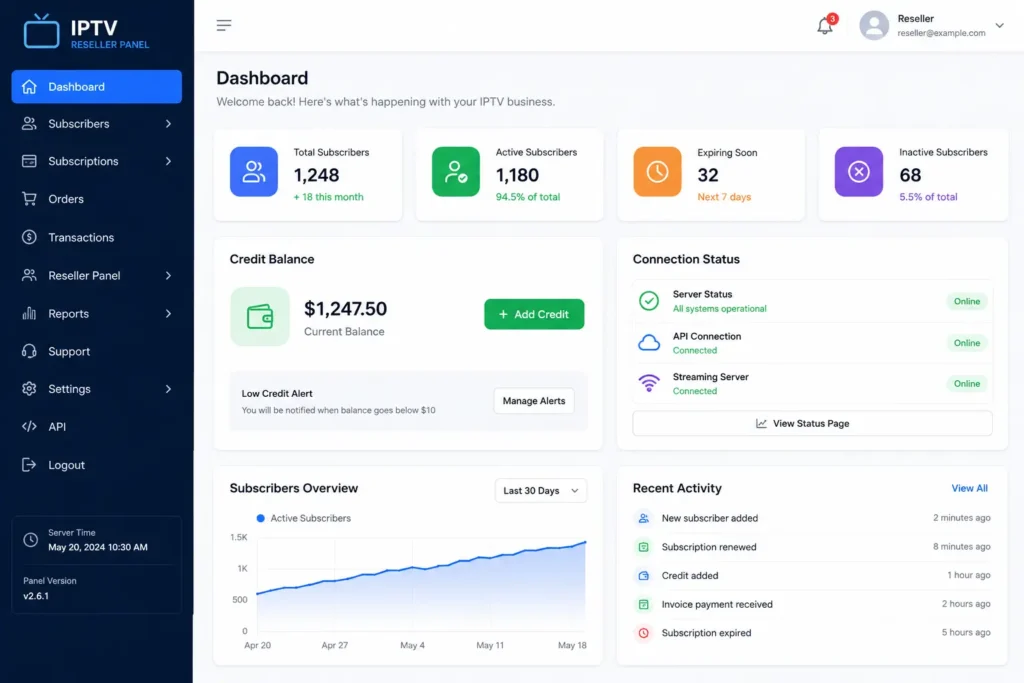
Panel depth is another factor. As a white label IPTV reseller, you need control. Can you create sub-resellers? Can you set credit limits? Can you suspend accounts instantly? Can you customize the EPG name so it matches your brand? The best platforms and according to TechRadar’s streaming industry coverage, the gap between top-tier and mid-tier reseller platforms is significant offer full multi-level reseller hierarchies and API access.
Red Flags to Watch For Before You Sign Anything
There’s a version of due diligence that most people skip. Here are the specific warning signs that should stop you in your tracks:
- No verifiable customer references from resellers who’ve been active for more than 12 months
- Unclear terms around content ownership and service continuity
- Support response times exceeding 24 hours during a trial period
- Credit-based systems with no transparent rollover policy
- Promises of “10,000+ channels” without a content breakdown by region or category
That last one is particularly misleading. A white label IPTV reseller panel with 12,000 channels where 8,000 are foreign-language duplicates is worth considerably less than one with 3,000 well-curated, high-definition channels matched to your target market.
Building Your Brand Without Building a Product
Here’s where the model gets genuinely exciting. Because you’re white labelling, you can build a compelling brand story without having any ownership over the underlying technology. That’s a real strategic advantage if you use it correctly.
Your brand should answer one question clearly: who is this for? A generic IPTV service with a vague name competes on price and loses quickly. A service branded specifically for expats in a particular country, or for sports-focused households, or for a specific regional diaspora community that builds loyalty. Customers stay not just because the service works, but because it feels like it was made for them.
Think about naming. Your brand name shouldn’t sound like a streaming service at all, if you can help it. Think of it more like a media brand something that could eventually sit alongside other entertainment products you might offer. The domain should be clean and memorable. Your logo should look as professional as anything a funded startup would produce. Tools like Canva Pro, or ideally a proper freelance designer via 99designs, can get you to a polished visual identity without breaking the bank.
One more thing on branding. Don’t underestimate the power of a decent onboarding experience. Your competitor, who is probably also a white label IPTV reseller, is almost certainly sending customers a PDF with an M3U link and calling it a day. A proper welcome email sequence, a setup guide tailored to the devices your customers actually use, and a quick-start video on your website these things cost you an afternoon to build and pay dividends for months.
Pricing Strategy: Where Resellers Leave Money on the Table
Let me be direct about this: most resellers underprice their service. They see competitors charging £8 a month and assume they need to match or beat that. What they’re actually doing is competing in a race to the bottom while ignoring the customers who would happily pay £15 or £18 for something that feels more trustworthy.
Value-based pricing is the correct framework here. What is the alternative your customer is comparing against? A legitimate Sky package costs upwards of £40 per month. Netflix, Disney+, and a Prime subscription together cost more than most IPTV service combined. Even if you price yourself at the premium end of the reseller market, you’re still offering extraordinary perceived value.
Consider a tiered structure. A comparison of common reseller pricing models shows roughly three approaches:
| Tier | Price Range | Typical Features | Best For |
|---|---|---|---|
| Basic | £8-£10/month | Standard definition, 1 connection | Budget-conscious users |
| Standard | £12-£15/month | HD streams, 2 connections, VOD | Most households |
| Premium | £18-£22/month | 4K where available, 4 connections, catch-up | Power users, families |
Bundling connections matters. Families won’t want to buy separate accounts for each TV. Building a multi-screen option into your standard tier removes a common objection immediately.
Annual billing deserves serious attention. Offering two months free on an annual plan doesn’t just improve your cash flow it dramatically reduces churn. A customer who’s paid upfront for a year has already committed to the service in a way that a monthly subscriber hasn’t.
The Support Problem Nobody Talks About
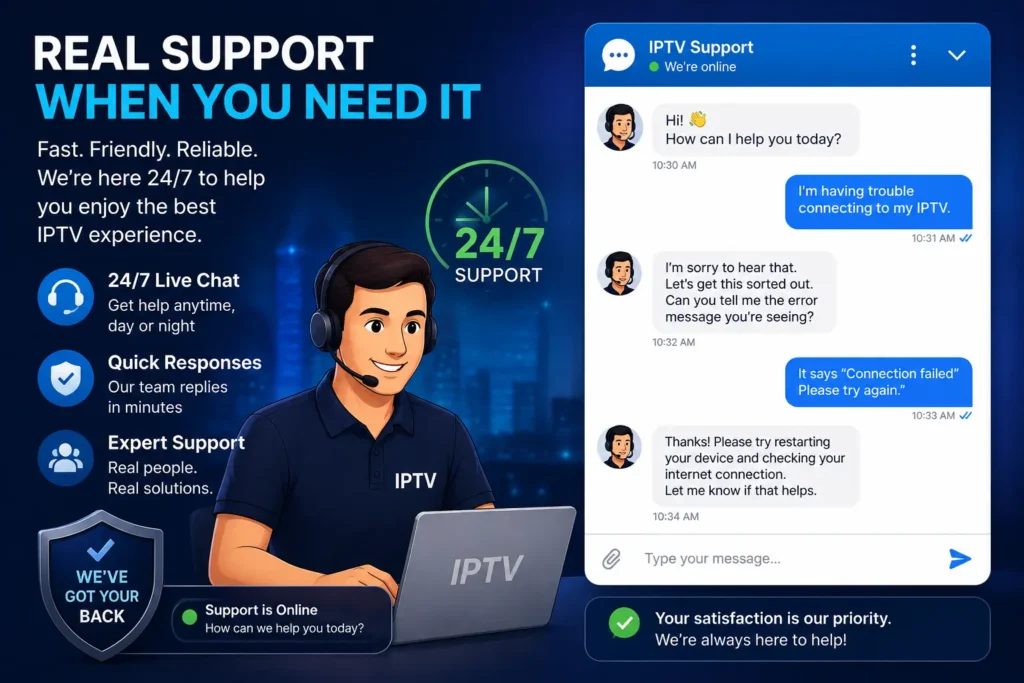
Can I share something that took me entirely too long to understand? Customer support isn’t a cost centre in this business. It’s your primary retention mechanism.
IPTV customers are not technical users, by and large. When something stops working on their smart TV at 7pm on a Friday, they want help immediately. They don’t want to log a ticket and wait 48 hours. They definitely don’t want to search through a FAQ that doesn’t address their specific situation.
How you handle that Friday evening crisis will determine whether they renew, whether they recommend you to a friend, or whether they write a review that follows your brand around for years. The stakes are genuinely high.
The practical solution for a solo or small-team white label IPTV reseller operation is to build out as much self-service infrastructure as possible. A Notion-based help centre costs nothing to set up. Video tutorials on YouTube (unlisted, linked only from your site) are surprisingly effective. A WhatsApp Business account with quick-reply templates can handle the majority of common queries without requiring live attention.
For escalations, be honest with customers about your response window. “We respond to all support requests within four hours” is a promise you can keep and a differentiator. “24/7 live support” is a promise that will exhaust you and that most solo operators cannot deliver.
Growing Beyond Your First 100 Subscribers
Getting to 100 paying subscribers is a meaningful milestone. It proves the concept. It generates enough revenue to cover costs with some margin. And it tells you which customer segments are actually converting. Now the question is: what comes next?
Referral programmes are chronically underused in this space. A white label IPTV reseller with 100 satisfied customers has 100 potential advocates. If each one refers just one person per year and you offer them a free month as a thank-you, you’re growing at a meaningful rate with almost no acquisition cost. Tools like ReferralHero or even a simple manual tracking system can run this without complexity.
Niche expansion is another pathway. If your first 100 subscribers were predominantly from one ethnic or cultural community, you already have social proof and word-of-mouth infrastructure within that group. Doubling down translated marketing materials, customer support in the relevant language, content curation emphasising that community’s interests is far more efficient than trying to appeal to everyone.
Is there a ceiling to what a single white label IPTV reseller can achieve organically? Probably. But most operators never hit that ceiling because they stop iterating too early. The businesses in this space that achieve genuine scale are the ones that treat every subscriber renewal as data: what made them stay, what almost made them leave, what they wish the service offered that it currently doesn’t.
According to Broadband TV News, the global IPTV subscriber base continues to grow year on year, and the shift toward cord-cutting isn’t slowing. The market is expanding. The question is really just about whether your brand is in a position to capture a meaningful slice of it.
Complete Guide to Choosing the Best IPTV Subscription
Frequently Asked Questions
Q: What does it cost to start as a white label IPTV reseller?
Starting costs vary considerably depending on the supplier and the scale you’re targeting. Most white label IPTV reseller programmes offer entry points between £50 and £300 for an initial credit package or panel licence. You’ll also need to budget for branding, a domain and hosting, payment processing, and basic marketing materials. A realistic launch budget, done properly, sits somewhere between £300 and £800 before you’ve acquired your first customer. The key is not to over-invest in infrastructure before you’ve validated demand in your specific market.
Q: Is a white label IPTV reseller business legal?
This is genuinely complex territory and the honest answer is: it depends significantly on your jurisdiction and the specific content you’re reselling. Some IPTV services operate with proper content licensing; many do not. You should obtain independent legal advice before starting, and you should never assume that a supplier’s claims about licensing are accurate without verification. Regulatory enforcement has increased substantially across the UK and EU in recent years, and this is not an area where ignorance provides protection.
Q: How many subscribers do I need before a white label IPTV reseller operation becomes profitable?
Profitability depends on your cost structure, but a rough breakeven for most small operations falls somewhere between 20 and 40 subscribers, assuming panel costs of £50-£100/month and pricing in the £12-£15 range. Beyond that point, each additional subscriber contributes almost entirely to margin. The real inflection point tends to come around 80 to 120 subscribers, where revenue is sufficient to fund meaningful reinvestment in marketing or support infrastructure.
Q: What devices should my white label IPTV reseller service support?
You should aim to support the devices your specific target audience actually uses, which is more important than supporting every possible platform. In UK and European markets, that typically means Android TV boxes (particularly Amazon Fire Stick and Nvidia Shield), smart TVs running Samsung Tizen or LG WebOS, iOS and Android smartphones, and MAG boxes for more technical users. Get device-specific setup guides in place before launch the majority of support queries will relate to setup, and good documentation reduces that volume significantly.
Q: How do I compete with established IPTV providers as a new white label IPTV reseller?
You don’t compete with them head-on you outflank them. Large, established providers are generic by necessity. As a white label IPTV reseller, your advantage is specificity: you can serve a niche audience better than a mass-market service ever will. Whether that’s a specific diaspora community, a sports-obsessed demographic, or a geographic area where you have existing relationships and trust, your focus is your competitive edge. Personal support, brand personality, and community connection are things a large provider simply can’t replicate at scale.