Don't miss our holiday offer - up to 50% OFF!
IPTV Reseller German Market Explained: Panels, Pricing, and the Legal Side

I got a message last month from someone in Cologne asking why every forum thread about iptv reseller options seemed to contradict the last one. Prices all over the place. Panels that vanished overnight. Advice that made sense in the UK but fell apart the moment German broadband quirks and payment habits entered the picture.
That’s the honest starting point for this article. Anyone looking at the iptv reseller German market right now will notice it isn’t small, and it isn’t simple either. Demand has grown steadily as more households look for flexible alternatives to traditional cable bundles, and resellers have rushed in to meet it.
Growth attracts opportunists as fast as it attracts genuine operators. That’s true in almost every reseller market, and Germany is no exception. What’s different here is the mix of language expectations, stricter consumer habits, and a customer base that researches before it buys.
Why does this matter to you specifically? Because the difference between a profitable reseller operation targeting German customers and a frustrating one usually comes down to decisions made in the first few weeks, long before the first real complaint ever arrives.
What an IPTV Anbieter Actually Sells You
Strip away the marketing and an iptv anbieter is really selling access, reliability, and support. The stream itself is only one piece. Credits, panel access, server uptime, and how fast someone answers when a channel drops all matter just as much.
I’ve watched new resellers focus heavily on price per credit while underweighting everything else. In many of the cases I’ve seen, a cheap panel with poor server distribution ends up costing more in refunds and lost customers than was saved on the initial credit purchase, though results vary by supplier and by how the reseller manages their own customer relationships.
Here’s a short breakdown of what typically comes bundled with a genuine iptv anbieter offer:
- Panel access with credit based activation
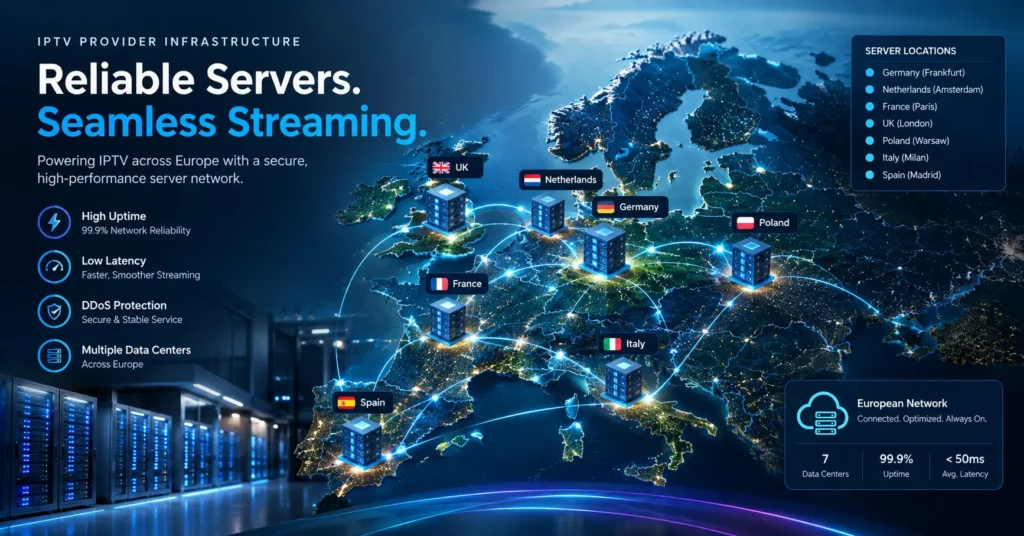
- Server infrastructure spread across multiple regions, in most established setups
- A basic reseller dashboard for managing end users
- Some form of technical support, though quality varies widely between providers
- Onboarding documentation, when the provider actually bothers with it
None of this is exotic. It’s infrastructure, plain and simple. Buyers who succeed in the German reseller space tend to treat it that way rather than chasing hype.
The Honest Cost of Getting This Wrong
Let’s not pretend every reseller story ends well, because it doesn’t. I’ve come across cases where someone invested savings into a panel that looked professional, only to discover the backend was itself reselling someone else’s access, several layers deep. When that top layer failed, everything under it collapsed at once.
Nobody wants to hear that their supplier might not be who they claim to be. But asking direct questions about server ownership and panel origin early on tends to save a much harder conversation later, usually with an unhappy customer base.
Is that a slightly cautious way to look at things? Maybe. But trade-offs are real in this business. A significantly lower price is usually worth questioning rather than assuming the worst, since the difference could come from thinner support, less redundancy, or simply a smaller margin the supplier is willing to accept.
Reseller Platforms vs Shortcuts: A Side by Side Look
Some resellers try to skip infrastructure entirely and just resell someone else’s login in bulk. It can work for a while. It rarely lasts.
| Factor | Structured Reseller Platform | Shortcut / Grey Panel Resale |
|---|---|---|
| Server stability | Generally distributed and monitored | Often a single point of failure |
| Support response | Dedicated channel in most cases | Frequently minimal or absent |
| Scalability | Built with growth in mind | Tends to break down under load |
| Long term trust | Builds a reputation over time | Often burns through customers fast |
| Customer retention | Typically more consistent | Frequently inconsistent, higher churn |
That table isn’t meant to scare anyone away from the business. It’s meant to show why phrases like best iptv subscription get thrown around so loosely online. Consistency, not channel count, is usually what earns that label from actual paying users.
What to Check Before You Buy (Iptv Kaufen Checklist)
If you’re at the iptv kaufen stage, meaning you’re actually about to purchase credits or panel access, it’s worth slowing down for a moment. This is the point where most avoidable mistakes get locked in.
A few things worth confirming before any iptv kaufen decision:
- Ask how long the supplier has operated under the same panel name
- Request a trial period or a small test batch of credits first
- Check whether server locations are disclosed at all
- Look for verifiable customer feedback rather than testimonials pasted on a homepage
- Confirm what happens to existing credits if the panel changes ownership
- Ask directly how billing and invoicing work, since this matters later for your own records
That list might feel cautious. But the number of panel collapses seen across this market in recent years has made caution a genuine competitive advantage rather than a weakness.
What “Best IPTV Subscription” Really Means to a Customer
Here’s a question worth sitting with. What does someone actually mean when they search for a best iptv subscription? For most buyers, it isn’t about having the most channels available. It’s closer to not wanting to think about the service at all once it’s set up.
That’s a low bar in theory and a harder one in practice. Uptime needs to be close to constant. Support needs to actually respond within a reasonable window. Pricing needs to feel fair relative to what’s delivered, rather than inflated by unnecessary tiers nobody asked for.
Coverage from outlets covering streaming services, including TechRadar, has generally leaned toward emphasising reliability over raw content volume in recent reviews, which lines up with patterns resellers tend to observe directly. Customers often forgive a smaller channel list more easily than repeated buffering.
For a reseller trying to build that kind of reputation, the practical takeaway is straightforward: reliability earns repeat customers, and repeat customers matter more to long term revenue than a single large sign up.
The Legal Side Nobody Wants to Talk About
This section deserves more care than most reseller guides give it, so it’s worth being direct here rather than vague. Anyone operating a reseller business that serves German customers should treat legal and tax obligations as a genuine planning step, not an afterthought.
In broad terms, running a commercial website aimed at German consumers generally involves requirements such as a proper Impressum, appropriate business registration, and consumer protection rules around distance selling, sometimes referred to as Fernabsatzrecht. The specifics, including VAT treatment and which withdrawal or refund rules apply, depend heavily on how the business is structured, where it’s registered, and who the customers are. This is genuinely a case where a qualified German accountant or commercial lawyer should be consulted rather than relying on a blog article, this one included.
Content licensing is a separate and equally serious matter. Rights to broadcast and retransmit television content in Germany involve a range of licensing bodies and agreements depending on the type of content and rights holder, and no single organisation covers all of it. Resellers should treat content rights as a specialist legal question rather than something to assume based on a general article.
This is also why Autven, the infrastructure vendor behind some of the reseller tooling discussed in this piece, positions itself strictly as a technology provider: panel software, server infrastructure, and reseller dashboards, with no involvement in content sourcing or licensing decisions. That distinction matters. The technology that runs a reseller business is a separate question from whether a given content arrangement is properly licensed, and the two shouldn’t be confused.
None of this is legal advice, and nothing here should be treated as a substitute for speaking with a solicitor or tax adviser familiar with German media and commercial law. Organisations such as the European Audiovisual Observatory publish ongoing research on how streaming regulation is evolving across the EU, and it’s a reasonable starting point for background reading before making any serious commitment to this market.
Mistakes First Time Resellers Make in Germany
Let me share a small story, slightly disguised for privacy. A reseller I spoke with launched a landing page aimed at German customers using machine translated copy. Technically correct German, but the tone was off, and it showed. Sign ups were noticeably lower than on a nearly identical English page aimed at UK customers.
Language quality is one mistake. Underestimating payment and invoicing expectations is another. German consumers often place real weight on clear, professional invoicing, so skipping that groundwork tends to show up quickly in conversion rates and support tickets alike.
A third common mistake is treating support and compliance as optional extras rather than core parts of the business. Resellers who cut corners on either one tend to lose customers, or attract unwanted attention, faster than they gain new business.
Why do these mistakes keep repeating across new entrants? Mostly because starting a reseller operation is easy, while running one well, both legally and operationally, is considerably harder than it first appears.
Where Autven Fits Into This Picture
Autven is the infrastructure vendor behind the reseller tooling referenced earlier in this article. The focus is entirely on the technology side of the business: panel reliability, server distribution, and giving resellers practical tools to manage their own customer base without constant guesswork.
Anyone comparing panel providers before making an iptv kaufen decision will benefit from understanding how credit systems function behind the scenes, since that structure often explains why pricing varies so much between suppliers.
No vendor can honestly guarantee success in the iptv reseller german market, and it would be misleading to suggest otherwise. What solid infrastructure does is remove one layer of risk, so the remaining business decisions, including the legal and tax ones, rest on something stable rather than something borrowed.
What to Do Next
If everything above sounds sensible in theory but you’re not sure where to start in practice, the smallest useful step is usually a small test batch of credits rather than a full commitment. It lets you evaluate server stability, response times, and support quality firsthand, before any larger decision or customer base is on the line.
From there, the natural next step is mapping out the legal and tax basics with a qualified adviser while your infrastructure is still small and easy to adjust. Doing both early, testing the technical side and confirming the compliance side, puts a new reseller in a far stronger position than doing either one alone.
Frequently Asked Questions
Is the iptv reseller german market still worth entering right now?
It can be, though competition has increased noticeably compared to a few years ago. Success now depends more on service quality, support, and proper business setup than on simply undercutting prices. New entrants who focus on reliability and getting their legal footing right tend to outlast those chasing volume alone.
What separates a legitimate iptv anbieter from a risky one?
Transparency about server infrastructure and a track record under the same panel name are strong indicators. Legitimate providers are generally willing to answer direct questions about uptime, support structure, and billing. Vague answers or a refusal to discuss server locations are worth taking seriously as warning signs.
How much should I budget before I actually do iptv kaufen for the first time?
Costs vary widely depending on credit volume and panel tier, so there’s no single figure that applies to everyone. It’s generally wiser to start with a smaller test batch than to commit heavily upfront. This limits exposure if the supplier turns out to be unreliable or the business needs adjusting early on.
How do I know if I’m offering a genuinely good IPTV experience to my own customers?
Low churn and minimal support tickets are usually better indicators than channel count alone. If customers rarely need to contact you, that’s often a stronger signal than any marketing claim. Consistent uptime tends to matter more than most new resellers initially assume.
Does German law actually affect a reseller business targeting German customers?
Yes, and it’s worth taking seriously rather than treating as a formality. Business registration, tax obligations, and consumer protection rules all apply when selling to German consumers, and content licensing carries genuine legal complexity. Speaking with a qualified adviser before launch is a sensible step, not an optional one.