Don't miss our holiday offer - up to 50% OFF!
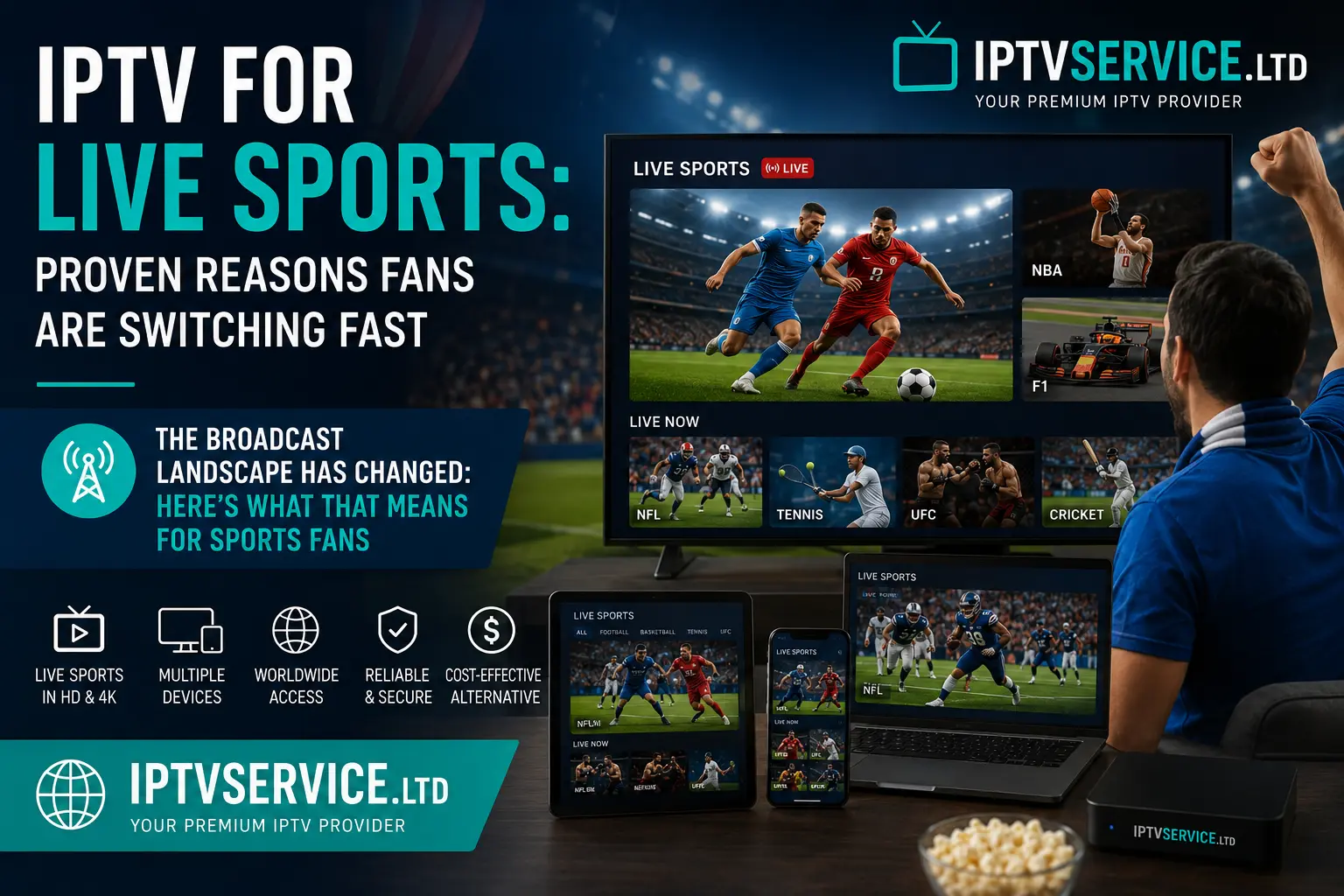
The Broadcast Landscape Has Changed: Here’s What That Means for Sports Fans

Picture this: It’s a Saturday afternoon in October. The match kicks off in twenty minutes. You’ve just realised your satellite dish has thrown an error code, your call to the provider is on hold, and you’re watching the clock tick. That used to be the nightmare. For a growing number of sports fans, it’s now a memory.
IPTV for sports has become one of the most compelling shifts in how people consume football, cricket, MMA, and everything in between. It’s not hype it’s infrastructure catching up with appetite. And if you haven’t seriously considered it yet, the gap between what you’re paying and what you could be watching is probably worth your attention.
As demand for live sports streaming grows, many entrepreneurs are exploring the IPTV Reseller UK market to build recurring revenue from IPTV subscriptions → /iptv reseller uk/
The numbers tell part of the story. According to a 2024 report from Digital TV Research, the global IPTV subscriber base is expected to surpass 280 million by 2026, with sports content cited as the primary driver of new sign-ups. That’s a staggering shift away from cable and satellite one that’s been building quietly for years and has now gone mainstream.
What Makes IPTV for Sports Genuinely Different
At its core, IPTV delivers television through your internet connection rather than through a satellite dish or physical cable. But that simple distinction carries enormous practical consequences for sports viewing. You’re no longer tied to a fixed dish, a specific receiver, or a rigid channel package built around a handful of sports rights holders.
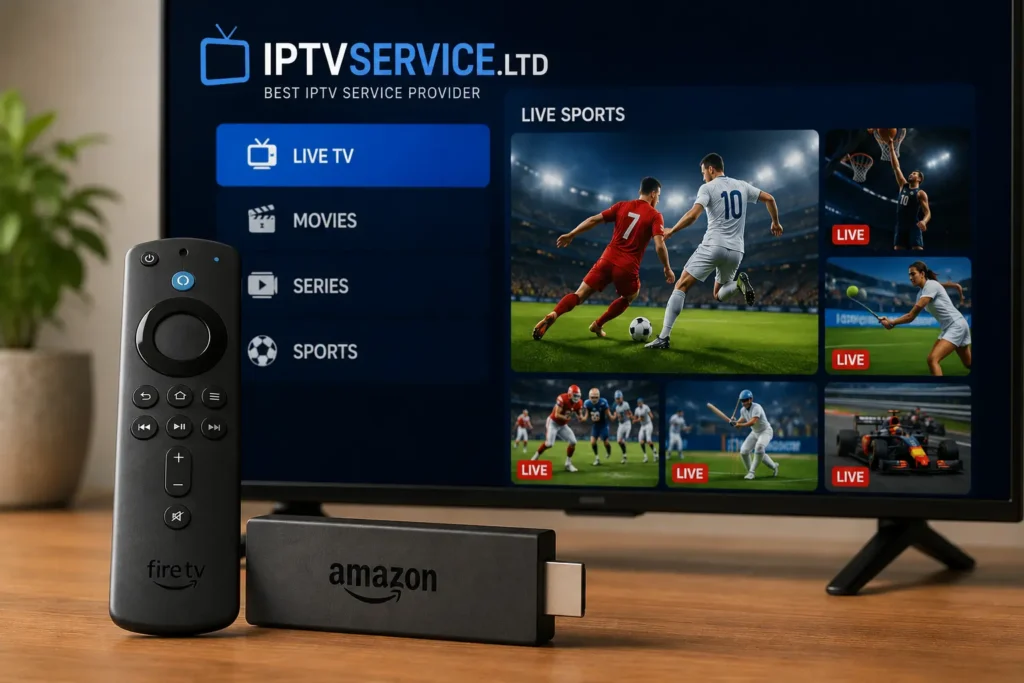
With a quality IPTV service, you can watch live sports on a smart TV, a FireStick, a mobile phone, or a laptop sometimes all at once, on different screens in the same house. That flexibility alone is a genuine shift from the single-box, single-room model that defined sports broadcasting for decades.
The best IPTV platforms for sports are now delivering:
- Multi-bitrate adaptive streaming, which automatically adjusts quality based on your connection
- Electronic Programme Guides (EPGs) that mirror traditional TV guides but span thousands of channels
- Catch-up and VOD libraries so you don’t miss a moment when kick-off clashes with real life
- Multi-audio and multi-language commentary, especially valuable for international fixtures
I’ve tested a number of services personally over the past few years from premium IPTV subscriptions to grey-area apps and the quality gap between a well-configured, legitimate IPTV service and traditional satellite has narrowed considerably. For most match-watching scenarios, a 50Mbps fibre connection and a decent IPTV app will serve you just as well as a dish, and often better.
The Real Cost Comparison: IPTV vs. Traditional Pay-TV
Let’s be direct about the money, because this is where the conversation gets interesting for most people.
Traditional pay-TV sports packages in the UK typically run between £40 and £80 per month once you factor in HD add-ons, premium sport tiers, and the inevitable broadband bundle. That’s before you account for the installation fees, annual price hikes, and the infuriating minimum contract terms.
Here’s a straightforward breakdown of typical costs:
| Service Type | Avg. Monthly Cost | Contract | HD Quality | Multi-Screen |
|---|---|---|---|---|
| Sky Sports Full Package | £55–£70 | 18 months | Yes | Limited |
| BT Sport / TNT Sports | £30–£45 | 12–18 months | Yes | Yes (extra cost) |
| Legitimate IPTV Service | £10–£30 | Monthly rolling | Yes | Often included |
| Free-to-Air (Freeview/iPlayer) | £0 | None | Varies | Yes |
Legitimate IPTV services I’m not talking about pirate streams here, which carry real legal risk and terrible reliability often sit in the £10 to £30 range per month for comprehensive sports packages. Services like Hulu + Live TV in the US, or Zattoo and Magenta TV in European markets, offer legal, licensed IPTV for sports at competitive prices.
What’s the catch? I’ll come to that. There always is one.
Which Sports and Leagues Are Best Served by IPTV?
Not all sports are equal when it comes to IPTV availability, and it’s worth being honest about where the gaps are.
Football is the undisputed king here. The Premier League, La Liga, Serie A, Bundesliga, and the UEFA Champions League all have extensive IPTV distribution through rights holders. Sky Sports, TNT Sports, and DAZN all deliver their content through IPTV-enabled apps and platforms. If football is your sport, you’re well catered for.
Cricket follows closely. The ECB’s rights arrangements with Sky and Channel 4 are mirrored in IPTV availability, and Willow TV’s IPTV service has made South Asian cricket far more accessible internationally.
MMA and boxing have benefited enormously. DAZN, which is fundamentally an IPTV service, carries huge chunks of the professional boxing calendar alongside Bellator events. For fans who remember the days of expensive pay-per-view buys on cable, this is a revelation.
Where IPTV for sports still feels thin:
- Domestic lower-league football coverage below the top four tiers remains patchy across most platforms
- Minority sports like handball, kabaddi, and domestic basketball often lack reliable IPTV coverage
- Some regional events are still locked to local broadcast-only deals with no streaming counterpart
The technology is there. The rights structures haven’t always caught up.
The Technical Side: What You Actually Need to Get Started
Minimum Requirements Worth Knowing
You don’t need to be technically minded to use IPTV for sports. But you do need a few things in order:
A solid internet connection is the foundation. For HD streaming of live sports, 25Mbps is a comfortable minimum; for 4K streams, you’ll want 50Mbps or above. If you’re watching on a Wi-Fi connection, make sure your router is in decent range of your streaming device interference and distance kill picture quality faster than anything else.
Devices and Apps
Most modern smart TVs from Samsung, LG, and Sony support IPTV apps natively. Amazon Fire TV Stick and Google Chromecast remain the most popular dedicated streaming devices, and both support the major IPTV applications. Android TV boxes offer the most flexibility for third-party apps, which matters if you’re exploring IPTV services that aren’t listed on mainstream app stores.
The TiviMate app is widely regarded as one of the best IPTV players for Android, particularly for sports its EPG integration and multi-screen view make it genuinely pleasant to use. For Apple users, Flex IPTV and GSE Smart IPTV are the most reliable options on iOS.
What Affects Stream Quality During Live Sports?
This is where a lot of people get frustrated, and it’s worth explaining why. Unlike on-demand content where buffering is tolerated, live sports streaming has zero tolerance for lag. A five-second delay might not matter for a documentary; it absolutely matters when half your street knows the goal scored before you’ve seen it.
The key factors that affect quality during IPTV live sports streaming:
- Server load on the IPTV provider’s infrastructure (this is their problem, not yours)
- Your own internet connection stability wired ethernet connections outperform Wi-Fi for this reason
- CDN (Content Delivery Network) quality better providers use multiple redundant servers
- Time of day peak hours between 6pm and 10pm create the most strain on networks
A VPN can occasionally help if your ISP is throttling sports streaming traffic, though it can equally introduce additional latency if the server is poorly located. Mullvad and ExpressVPN are two services that consistently perform well in low-latency streaming tests, according to Wirecutter’s annual VPN roundup.
The Honest Trade-offs You Should Know Before Switching
IPTV for sports isn’t a perfect solution for every household, and I’d rather be straight with you than oversell it.
Reliability is contextual. A premium satellite signal is largely immune to internet outages and broadband congestion. IPTV is entirely dependent on your connection. If your broadband drops on a Sunday afternoon during the second leg of a knockout tie, that’s a bad afternoon. This is a real concern for rural households where internet infrastructure remains unreliable.
Legal grey areas are genuinely grey. The market for IPTV services includes legitimate, fully licensed platforms, and it also includes a sprawling underground of illegal streams often sold through social media and WhatsApp groups. The illegal services are cheap, often have broad sports access, and are entirely unreliable and legally risky. The FACT (Federation Against Copyright Theft) has prosecuted distributors of illegal IPTV services in the UK, and while end-user prosecution is rare, it isn’t impossible. Do this properly, or don’t do it at all.
Sports rights remain fragmented. Even the best IPTV packages won’t cover everything. You may still need two or three services to cover Premier League football, cricket, and Formula 1 the same complaint people have with streaming video. The aggregation problem hasn’t been solved yet.
Is IPTV right for everyone? Genuinely, no. If you live somewhere with patchy broadband and you’re a passionate football fan who can’t risk a buffering moment during injury time, keeping your satellite dish as a backup isn’t a bad idea.
UK Sport IPTV: The Best Way to Watch Live Football and Sports → /best iptv subscription/
IPTV for Sports: Choosing a Provider That Won’t Let You Down
The Questions Worth Asking Before You Subscribe
So you’ve decided to make the move. The question of which IPTV provider to choose for live sports is legitimately complex, and the answer depends heavily on which sports matter most to you.
Here are the questions that actually separate good providers from bad ones:
Does the provider hold the rights to the sports you care about? This sounds obvious, but a surprising number of people subscribe to IPTV services that promise “all sports” without checking whether their specific competitions are included.
What is the server uptime during peak sports events? The worst time to discover your provider’s infrastructure buckles under load is during a Champions League final. Look for providers who publish their uptime records, or read independent reviews on forums like Reddit’s r/IPTV and TechRadar.
Is the service properly licensed? For UK viewers, legitimate IPTV services carrying Premier League content should hold a sub-licence from a rights holder. If a service can’t answer that question clearly, walk away.
Providers Worth Considering
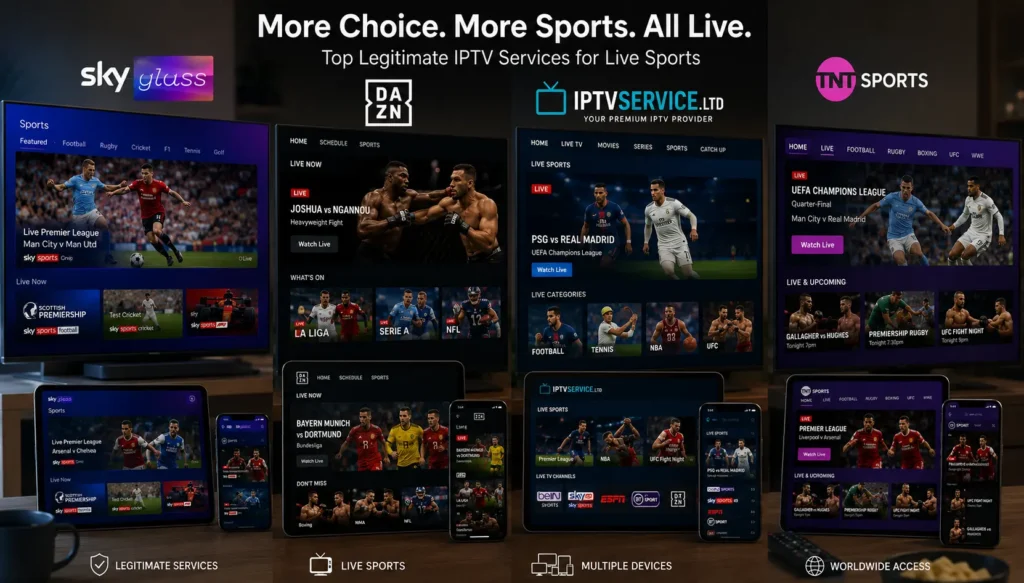
For UK viewers, the clearest legal IPTV paths to live sports currently run through Sky Glass (Sky’s dedicated IPTV box), the TNT Sports app via BT, and YouTube TV for those with US access. Internationally, DAZN has expanded aggressively and now represents one of the most sport-dense IPTV platforms available.
For fans seeking broader international sports content at lower price points, Zattoo’s international packages offer a genuinely diverse range of European sports channels through a clean, well-supported IPTV interface.
What should make you walk away immediately? Any service offering hundreds of channels at under £5 per month. That price point is structurally impossible for a legitimately licensed IPTV service. You’re either looking at illegal streams or a company that will disappear in three months with your money.
Frequently Asked Questions
1. Is IPTV for sports legal in the UK?
IPTV itself is a perfectly legal technology used by major broadcasters like Sky, BT, and the BBC. Whether a specific IPTV service is legal depends entirely on whether that service holds the proper broadcasting licences for the content it carries. Services from established broadcasters are fully legal. Third-party IPTV subscriptions that offer unlicensed access to Sky Sports or TNT Sports content are not legal, and using them may expose you to legal risk under the Copyright, Designs and Patents Act 1988. When in doubt, verify the licensing status of any service before subscribing.
2. What internet speed do I need for IPTV live sports streaming?
For standard HD streams, a stable connection of at least 25Mbps is sufficient for IPTV live sports without significant buffering or quality degradation. For 4K content, aim for 50Mbps or higher. The stability of your connection matters as much as its headline speed a consistent 25Mbps wired ethernet connection will outperform a fluctuating 100Mbps Wi-Fi signal in most live streaming scenarios. Most UK fibre-to-the-home connections comfortably exceed these requirements.
3. Can I watch IPTV for sports on multiple screens at the same time?
Many IPTV services, particularly the major licensed platforms, support simultaneous streams on multiple devices. The specific number varies by subscription tier Sky Stream, for instance, allows multiple concurrent streams within the same household. Third-party IPTV services vary considerably, with some offering generous multi-connection allowances and others restricting to a single stream. Always check the concurrent stream policy before subscribing, especially if multiple people in your household want to watch different sports simultaneously.
4. How does IPTV handle buffering during live sports events?
Buffering during live IPTV sports streams is typically caused by three things: insufficient internet speed at the viewer’s end, server congestion at the provider’s end, or network throttling by an ISP. A wired connection rather than Wi-Fi eliminates most viewer-side issues. Provider-side congestion is harder to control, which is why choosing a well-resourced IPTV provider with robust CDN infrastructure is important. A VPN with a server close to your physical location can sometimes bypass ISP throttling, though this adds a layer of complexity and isn’t guaranteed to help in all cases.
5. Are there free IPTV options for watching live sports?
There are genuinely free and legal options for watching certain live sports via IPTV. In the UK, BBC iPlayer, ITVX, and Channel 4 streaming all qualify as IPTV and carry significant live sports including Test cricket, Six Nations rugby, and selected athletics events. Pluto TV offers some free sports content in a linear IPTV format. These free, ad-supported platforms are limited in scope compared to paid services, but they’re a legitimate starting point for those unwilling to commit to a subscription before testing the experience.